


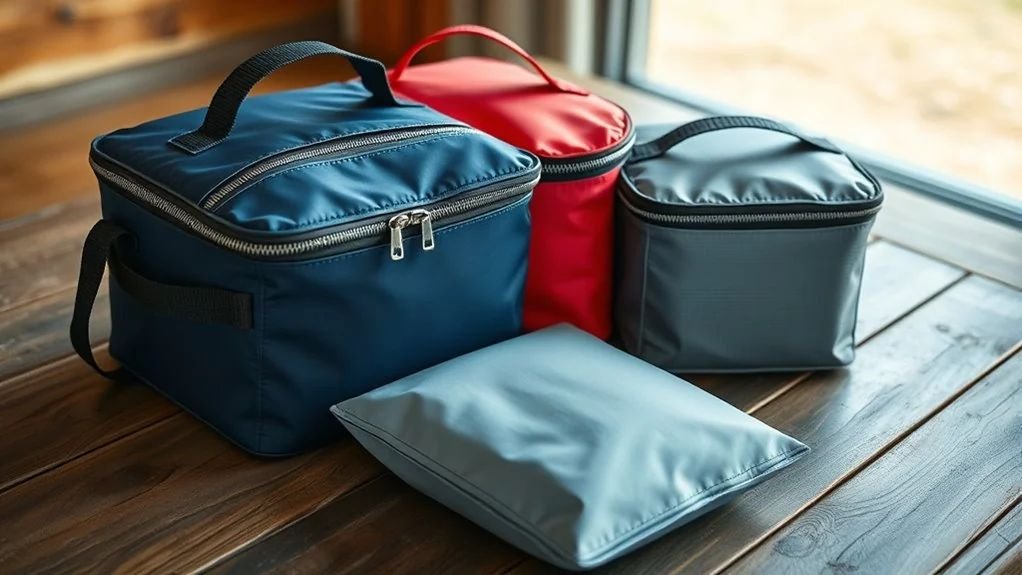
Pack a lunch at 7 a.m. and eat it at noon. Will it still be safe? That depends on the bag. Knowing how insulated bags work helps you choose one and use it well. This guide covers the materials, the physics, and the habits that keep food at the right temperature.
The Basics of Heat Transfer
Heat always moves from warm areas to cool ones. It travels three ways. Conduction passes heat through direct contact. Convection moves heat through air. Radiation sends heat as energy waves, like sunlight.
An insulated bag slows all three. It does not create a cold. It only slows how fast outside heat reaches your food. That is why an ice pack still matters.
Once you see it this way, every part of the bag makes sense. Each layer targets one kind of heat flow.
Cooler Bag Construction
Cooler bag construction uses three main layers. The outer shell, usually polyester or nylon, protects against wear and weather. The middle layer is foam. The inner liner holds the food and wipes clean.
Foam does the heavy lifting. Closed-cell foam traps tiny pockets of air. Air moves heat poorly, so the foam slows the exchange between outside and inside.
Seams matter as much as material. Heat-welded seams keep liquid in and cold air from leaking out. Stitched seams are cheaper, but the needle holes can let moisture and air pass.
For picnics, deliveries, and day trips, bulk cooler bags are a standard option, since they combine thick foam walls with a leak-resistant liner.
Insulated Bag Lining Materials
Insulated bag lining materials affect both temperature and hygiene. PEVA is soft, flexible, and free of chlorine. Aluminum or metalized film reflects radiant heat. Food-grade nylon and similar fabrics add a smooth, wipeable surface.
A good lining has no gaps. Spills that reach the foam can leave odors and encourage bacteria. Seamless or sealed linings are easier to keep clean.
Wipe the interior with mild soap and warm water after use. Let the bag air dry with the zipper open. Trapped moisture is the quickest way to make a bag smell.
Thermal Insulation in Lunch Bags
Thermal insulation in lunch bags works on a smaller scale. A typical lunch bag uses a thin foam layer and a foil or PEVA liner. That is enough to hold temperature for a few hours.
Size changes the result. A small bag has less air to warm up, but also less foam. A tightly packed lunch holds temperature better than a half-empty one, since there is less air inside.
For schools, offices, and job sites, lunch bags in bulk often come in a few sizes so buyers can match different meal types and routines.
Lunch Bag Insulation Technology
Lunch bag insulation technology keeps improving in small ways. Some bags use thicker foam in a slim profile. Others add reflective films that bounce heat away from the food.
A few designs use gel packs built into the walls. Others use phase-change materials, which absorb heat as they shift from solid to liquid. These tend to cost more, but they hold a steady temperature longer.
For most daily lunches, a simple foam bag with a frozen pack works well. Advanced materials help when trips run long or the weather runs hot.
Food Temperature Retention
Food temperature retention is about both comfort and safety. The USDA advises keeping cold food at 40°F or below and hot food at 140°F or above. Food in between is in the range where bacteria grow quickly.
Perishable food should not sit in that range for more than two hours. In hot weather, above 90°F, the limit drops to one hour.
Several habits help. Chill the bag before packing. Use frozen packs on top and bottom. Pack cold items right before leaving. For hot food, warm the bag with hot water first, then dry it.
Reusable Food Storage Bags and Containers
Reusable food storage bags and containers fit well inside an insulated bag. Silicone pouches and sealed containers keep food from leaking and keep flavors from mixing.
Pack in layers. Keep the coldest items against the ice pack. Place delicate foods, like fruit or salad, away from direct contact with ice to avoid freezing. Fill gaps with small items so food does not slide around.
Keep the bag out of direct sun and out of a hot car. A dark car interior can heat up quickly and overwhelm even a thick insulated bag.
The Takeaway
Understanding how insulated bags work comes down to slowing heat flow. Foam traps air, linings reflect heat, and tight seams keep conditions steady. Ice packs and smart packing do the rest.
Choose a bag with solid walls, a clean lining, and a tight closure. Then pack cold, open it less, and keep it out of the sun.
